
The Coastal Solutions Fellows Program at the Copper River Delta Shorebird Festival
This year, the Coastal Solutions Fellows Program (CSF) received a very special invitation from the U.S. Forest Service to participate in the 35th Copper River Delta Shorebird Festival in Cordova, Alaska, from April 28 to May 6, 2025. This was a unique opportunity to share experiences and lessons learned in shorebird conservation with scientists, environmentalists, government agencies, aquaculture producers, fishers, and the general public, exchanging perspectives from different regions of the hemisphere.
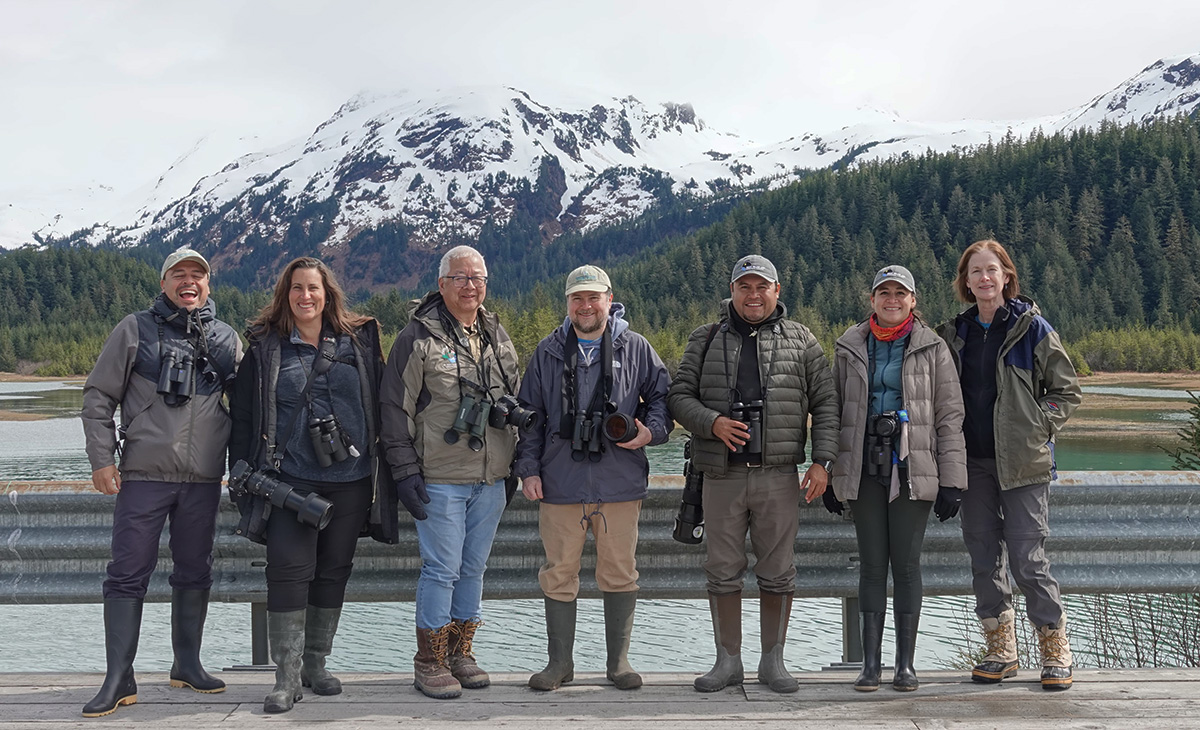
Coastal Solutions Fellows Natalia Martínez Curci from Argentina, Jonathan Vargas from Mexico, Julia Salazar from Honduras, and Jorge Parra from Colombia, along with our director Osvel Hinojosa-Huerta, were invited to participate as keynote speakers at the festival and as representatives of shorebird conservation in Latin America.
Shorebirds live in a world without borders and depend on the conservation of habitats all along their flyways across the Americas. This invitation allowed us to be part of an incredible collaborative effort with a common goal: to protect the critical sites that these birds depend on to complete their life cycle. The visit was not only an opportunity to be part of the festival, but also included a capacity-building agenda designed jointly with the U.S. Forest Service.


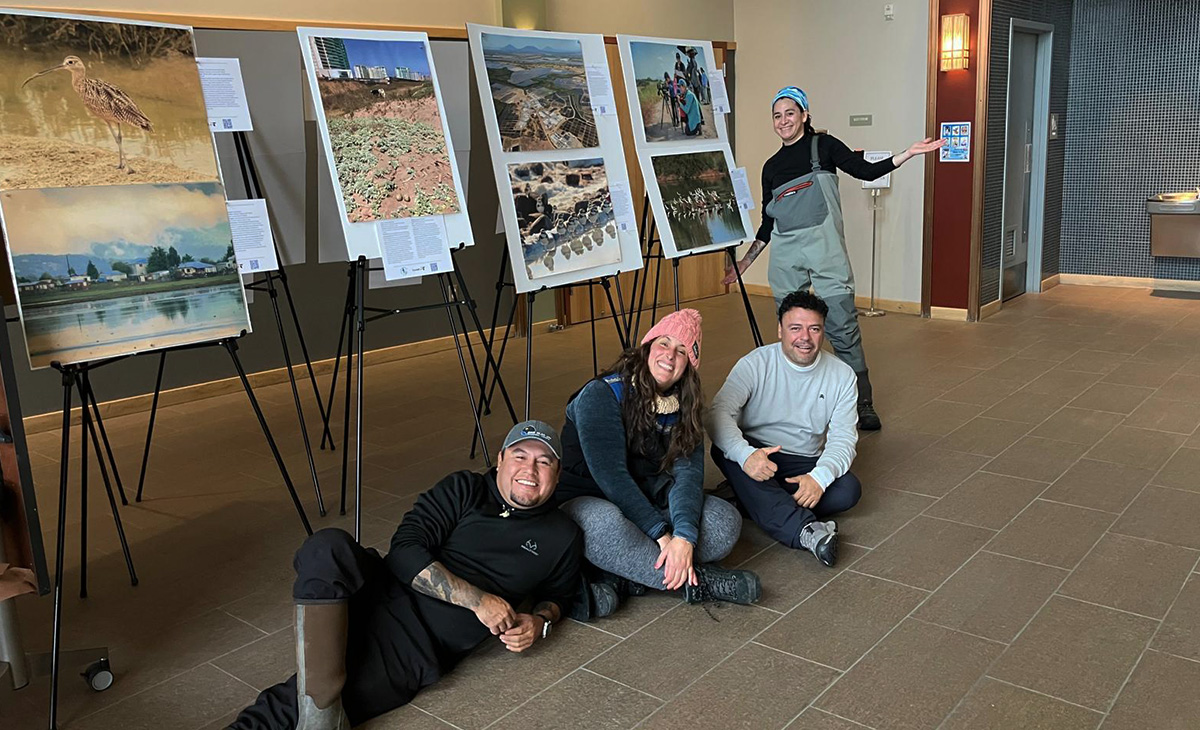
During the festival, Osvel and the fellows presented the CSF Program and the fellows’ projects in each of their countries, sharing the various strategies they have used for conservation along the Pacific Flyway. From protecting Snowy Plover breeding areas in Mexico and partnering with salt producers in Honduras, to establishing new protected areas in Colombia and building alliances with seaweed harvesters in Chiloé, Chile, the fellows showcased the diversity of conservation mechanisms being implemented across Latin America.
Highlights of the visit included a visit through Prince William Sound, where fellows learned about local initiatives in coastal restoration, kelp farming, and oyster aquaculture—efforts that integrate conservation with regenerative economic activities. They also explored the mudflats of the Copper River Delta, discussing the challenges and opportunities for protecting this site of hemispheric importance for shorebirds.
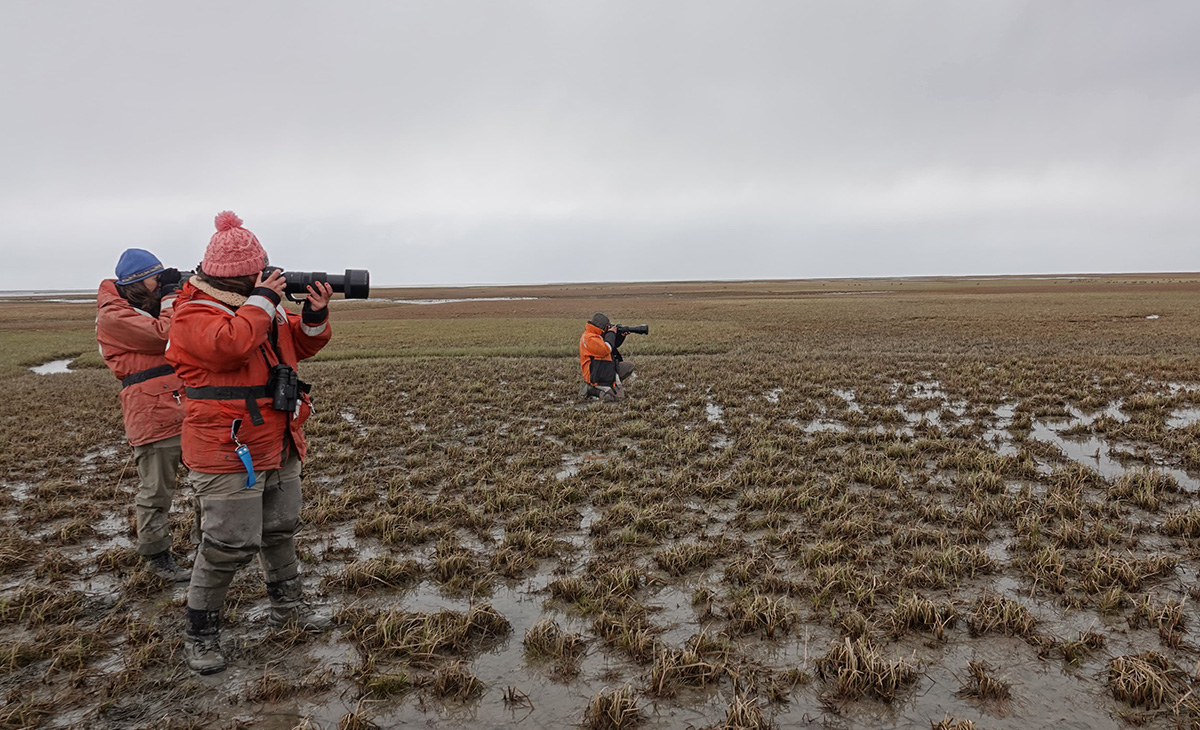
“Participating in the Copper River Delta Shorebird Festival in Alaska was a deeply meaningful experience for me. After so many years studying shorebirds in South America, what moved me the most was finally visiting the place where they migrate, on the other side of the continent. Seeing the landscapes I had long imagined through their movements with my own eyes was truly emotional.”
—Natalia Martínez-Curci, Coastal Solutions Fellow 2019
The town of Cordova, with just over 2,300 residents, “has historically been home to the Eyak, the Chugach Region peoples, the Tlingit, and the Athabaskan, organized as a federally recognized tribe. The Native Village of Eyak continues to govern and protect the health, safety, and welfare of its tribal members, while supporting the revitalization of traditional languages and culture” (https://www.cityofcordova.net/about-cordova/). Their ancestral connection to the environment, protection of watersheds, fishing, and shorebirds is an essential part of the region’s culture.
“It was a very enriching experience, especially learning how a federal agency like the U.S. Forest Service participates in natural resource management, and how communities are recognized as key actors in this process. On the other hand, seeing how the entire community of Cordova was completely involved in the festival was very moving—how art revolves around shorebirds and how they play such an important role in the culture of the town. That connection helps get everyone involved in protecting critical habitats, in collaboration with the authorities.”
—Jorge Parra, Coastal Solutions Fellow 2022
On May 1, the group participated in a Regenerative Tourism Workshop alongside the U.S. Forest Service, the Cordova Chamber of Commerce, and local entrepreneurs. In this space, Julia Salazar, Coastal Solutions Fellow from Honduras, shared her experience in salt production, nature-based tourism, and conservation—exchanging lessons on how tourism can become a tool for local development and coastal ecosystem protection.
The following days were fully dedicated to the Shorebird Festival itself. This annual event—a pioneer in its kind worldwide—draws hundreds of participants and guests from around the globe. For the past 35 years, the festival has been organized through the active involvement of the community, Indigenous tribes, fishing guilds, local authorities, and federal agencies, under the strong leadership of the Cordova Chamber of Commerce.
“This trip was an incredible learning experience. I came to understand how a small community can become a global example in shorebird conservation, working together to protect a natural area that not only benefits birds but also the people who depend on that ecosystem. The Copper River Delta Festival and the celebration of 35 years of Alaska’s first WHSRN (Western Hemisphere Shorebird Reserve Network) site of hemispheric importance is a model to admire—and even more so, to experience in person. Hearing the stories of those who organize it year after year and seeing how the whole community gets actively involved was truly inspiring.”
—Julia Salazar, Coastal Solutions Fellow 2023
This has undoubtedly been one of the most meaningful experiences for our fellows, with unique and special sightings. In Latin America, migratory shorebirds often appear in non-breeding plumage, since they don’t breed during migration but rather use these countries as safe places to spend the harsh northern winter.
“I’ve seen thousands of these plovers (Black-bellied Plover – Pluvialis squatarola) in Mexico, but seeing them in their alternate plumage, with the snowy mountains of Alaska in the background, was simply breathtaking.”
—Jonathan Vargas, Coastal Solutions Fellow 2019
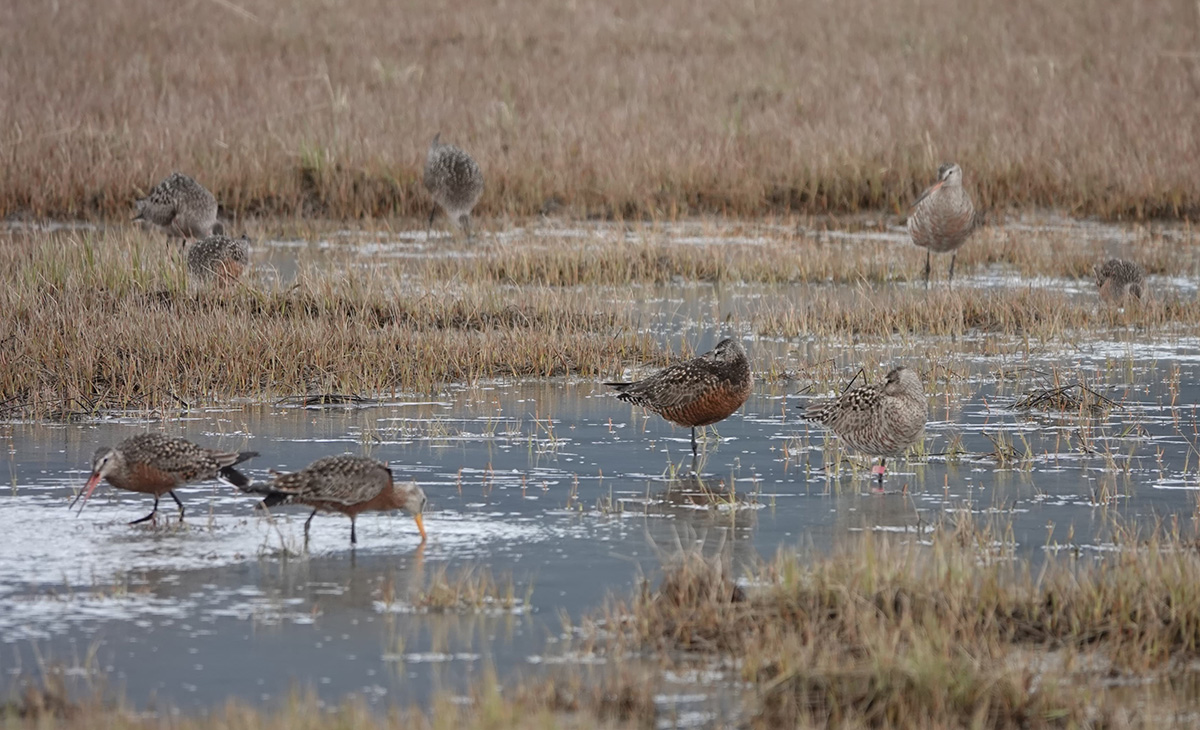
One of the most celebrated moments and most valuable sightings was when the fellows, during one of their birdwatching outings, spotted a long-distance migrant that had been banded over 7,000 miles away in Chiloé, Chile, by Natalia and her research team from the Universidad Austral de Chile.
“The experience became even more special when, among the millions of birds arriving in Alaska, I spotted a Hudsonian Godwit (Limosa haematica) banded in Chiloé by our research team at the Bird Ecology Lab of the Universidad Austral de Chile. It was the only banded bird I saw during my stay—and it was one of ours. I felt as if it had flown all the way there just to welcome me.”
—Natalia Martínez-Curci, Coastal Solutions Fellow 2019

The visit concluded with a final meeting with the U.S. Forest Service to review lessons learned, exchange feedback, and define opportunities for future collaboration. This final space reaffirmed the importance of continuing to link science, public policy, and community engagement along the Pacific Flyway.
This unique and invaluable experience would have not been possible without the support of Jim Chu, member of the Advisory Board of the Coastal Solutions Fellows Program and natural resources specialist, now retired from the U.S. Forest Service but an active collaborator in our network; and Erin Cooper, who has worked for many years in wildlife conservation efforts in Alaska with the U.S. Forest Service, has been a key organizer of the festival, and since 2001 has been a member of the Copper River International Migratory Bird Initiative, building institutional collaborations across the hemisphere for shorebird conservation.
We are deeply grateful for their invitation and support during the field visits, activities, and conversations with the conservation community of Cordova, Alaska—and for including the Coastal Solutions Fellows Program and our fellows as a key voice for the conservation of the Pacific Flyway in Latin America.
The Coastal Solutions Fellows Program builds and supports an international community to design and implement solutions that address coastal challenges across Latin America. Our main goal is to conserve coastal habitats and shorebird populations by building the knowledge, resources, and skills of Latin American professionals, and by fostering collaborations among multiple disciplines and sectors.