
A new milestone for coastal wetland conservation in southern Chile: first ordinance on sustainable tourism in the Maullín River wetlands
By Daniela Ruz Alvear – Coastal Solutions Fellow 2023
Globally, tourism is continuously expanding, exerting increasing pressure on the environment resulting in territorial and environmental impacts. Southern Chile is no exception. The loss and degradation of nesting, feeding, and resting sites for many species of shorebirds has been intensified by increased disturbances caused by tourism harmful practices.
From April 2022 to May 2024, monitoring of ‘harmful tourism and recreational activities’ was carried out as part of my Coastal Solutions project “Sustainable Community Tourism: Strategy for the Conservation of Shorebirds in Three Western Hemisphere Shorebird Reserves Network Sites (WHSRN) in Southern Chile,” conducted in conjunction with Fundación Conservación Marina in six wetlands in the Los Lagos Region, including sites in Maullín and Chiloé. These efforts made it possible to analyze the frequency of occurrence of ten activities considered as “harmful practices ” to subsequently propose conservation measures that could curtail their occurrence.
Among the most frequent practices identified are recreational campfires, sports activities such as off-trail jogging, and bicycle rides that disturb shorebirds. In addition, wetlands were found to be used for swimming and sunbathing, which leads to motorized vehicles and unsupervised pets entering shorebird resting and nesting areas.
In this context, the introduction of regulations for sustainable tourism that are grounded in nature and local culture, emerge as a key tool for promoting tourist destinations while allowing for responsible development, improving the local economy and managing impacts in a controlled manner. This is why the first Municipal Ordinance on Sustainable Tourism in the Maullín River Wetland was created as a means for local management, regulation, and land use planning, with the aim of balancing the quality of human interactions with the natural environment.
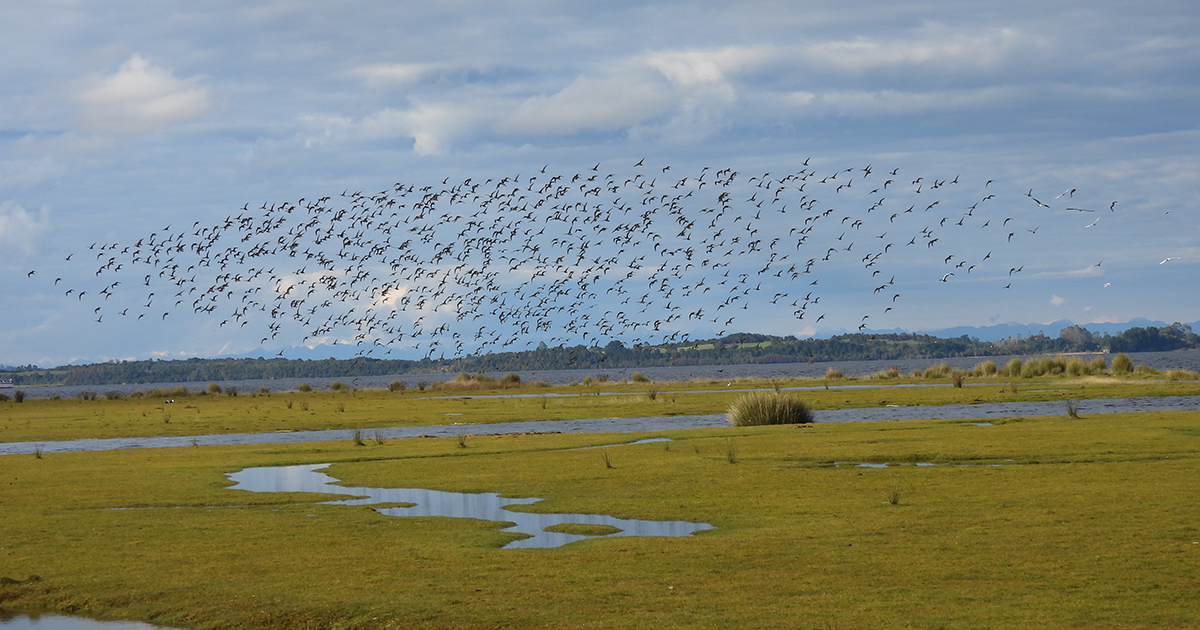
Among the measures proposed in the ordinance, to mention a few, is the prohibition of motorized vehicles in wetlands of high conservation value, which will be enforced by the Chilean Navy. It also seeks to regulate the number and frequency of motorboats and kayaks, with the latter now requiring maritime authorization for boarding. In the case of campfires, the Chilean National Police are primarily responsible for their regulation and enforcement.
For wetlands with infrastructure geared toward sustainable tourism, such as walkways and nature observation decks, visitor capacity limits were calculated, as we identified that most of the direct disturbance to shorebirds was caused by birdwatchers and photographers who did not follow proper guidelines for approaching wildlife.
For this reason, a very important measure in the ordinance is to respect minimum safe distances for bird watching, for which the training of local tour guides is essential. In this regard, the Municipality of Maullín, through its Tourism Office, must maintain an updated register of tourism operators and support their enrolment and training so that all guides can be included in the National Tourism Service (SERNATUR) register of guides.
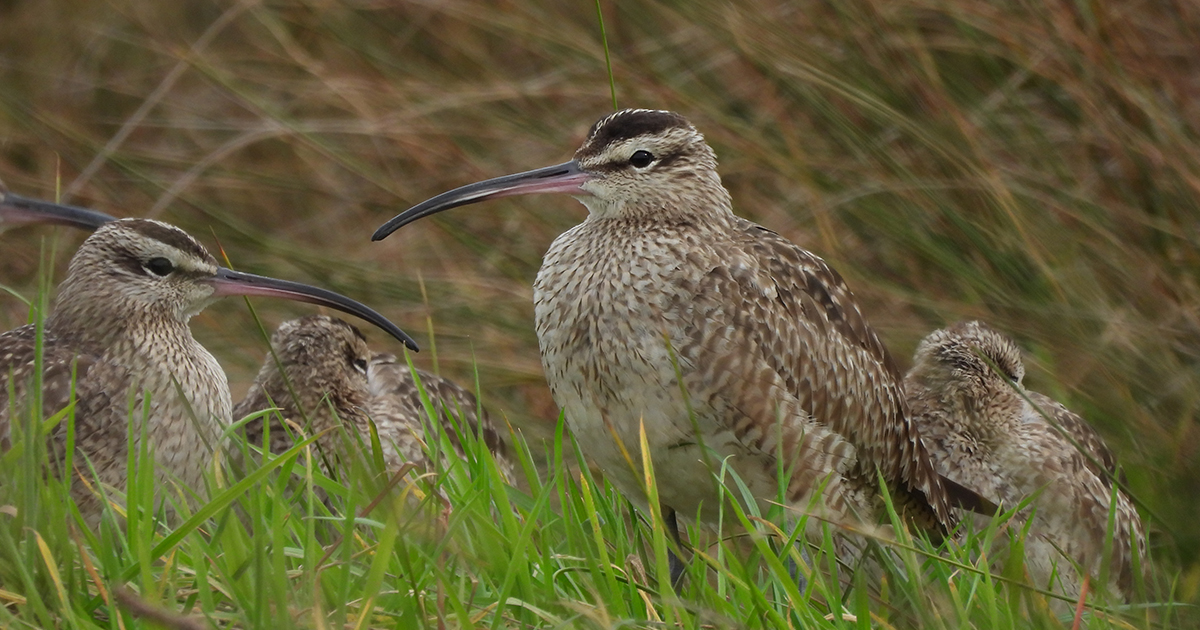
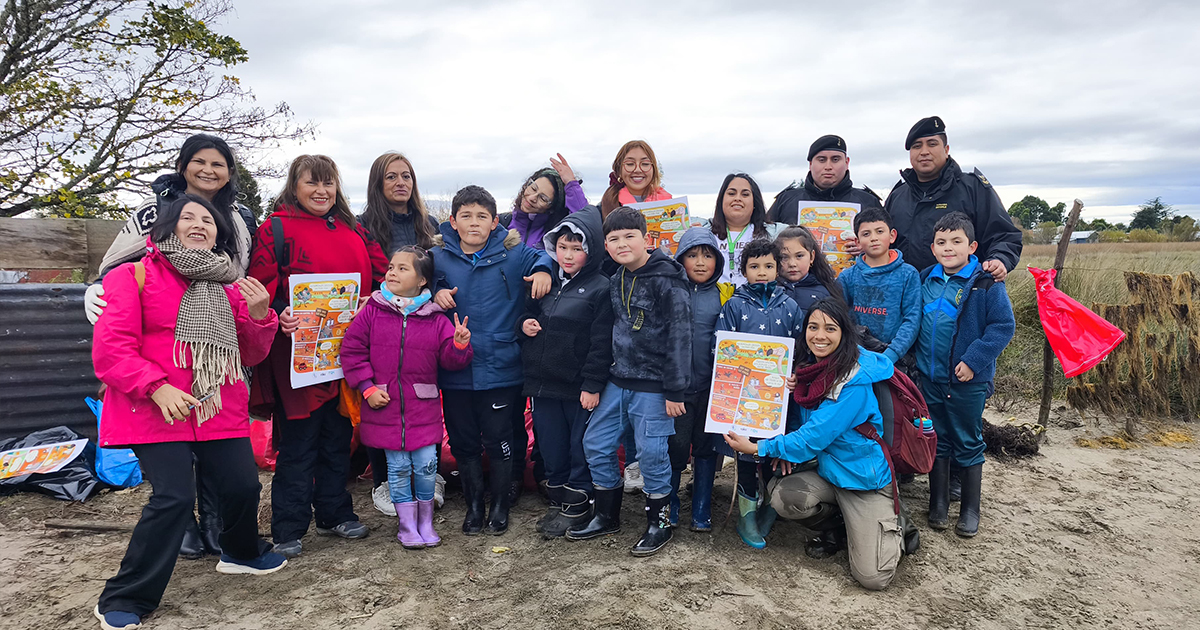
Meanwhile, environmental education focused on areas of interest for sustainable tourism and in schools is recognized as a strategic and essential measure for reducing harmful practices, by using wetlands as real-life classrooms. This is complemented by the deployment of infographics and signage to promote responsible tourism.
The results of the study made it possible to identify the main threats and the sites most prone to disturbance, finding that many of the disturbances affecting shorebirds, repeatedly causing them to fly away, are not always intentional but rather a result from ignorance. However, pollution from solid waste left behind by visitors, the latent threat of fire spreading from campfires, and, of course, the dangers of crushing nests or chicks with motor vehicles, as well as predation by unsupervised pets (dogs and cats), pose serious risks to shorebird populations.
I drafted the ordinance in collaboration with my host institution Fundación Conservación Marina, with support from the Maullín Municipality’s Office of Tourism and Environment. The National Tourism Service (SERNATUR) provided technical legislative review, along with an expert in municipal legislation and ordinances. The ordinance was validated, reviewed, and approved by the local community, local authorities, and the Chilean Navy through a participatory workshop and personalized surveys.
Among the main objectives of the ordinance are:
- Establishing a regulatory framework that promotes the development of sustainable tourism as an important economic activity at the community level, ensuring the conservation of wetlands as a fundamental element of Maullín’s biocultural heritage.
- Promoting the implementation of best tourism practices to ensure the long-term viability of tourism activities, based primarily on the observation of wetland flora and fauna.
- Strengthening the development of sustainable tourism among local operators, improving tourism management and planning in the region, sustainable public use of resources, biodiversity conservation, and the quality of the visitor experience.
The ordinance will regulate tourism activities in the municipality’s wetlands, which, in addition to being important for shorebird conservation, are often among the most attractive sites for tourism and, therefore, the most fragile and threatened. These include the coastal wetlands of La Pasada, Lepihue, Quenuir, and Amortajado, which are used as beach recreational areas, but also some tributaries of the Maullín River Wetlands Nature Sanctuary, such as the Carrión Estuary, the San Pedro de Nolasco River (Amortajado sector), and the Cariquilda and Huiman Rivers, used for small motorboats, kayaks, and stand-up paddleboards.
The implementation of this local public policy will be carried out by the Municipality of Maullín, through the Tourism Office, with the support of the Coastal Solutions Fellows Program, Fundación Conservación Marina, and Sustainable Tourism Operators that have been trained in birdwatching and best practices for sustainable tourism. Enforcement will be carried out by municipal inspectors, the Chilean Navy, and the Chilean National Police.
On the other hand, this regulation allows and promotes activities organized and carried out by residents or visitors to the municipality that are intended for conservation, sustainable use, as well as educational, cultural, recreational, and scientific activities.
The approval of this sustainable tourism ordinance for wetlands, passed on November 29, 2024 by the Municipal Council, and enacted on August 21, 2025 via exempt mayoral decree, constitutes a milestone for the sustainable development of the commune. It sets a precedent for other municipalities in the region that recognize sustainable tourism as a key strategy for the conservation of shorebirds and their habitats.
Finally, this process demonstrates that through concrete results and commitments, local public policies for sustainable tourism, based on nature and local culture, can promote destinations as sustainable tourist attractions, improve the local economy, and enable effective management of impacts.
In keeping with this, and together with Fundación Foike, an organisation of which I am co-founder, I will continue to support and collaborate with the Municipality of Maullín in implementing the ordinance, particularly through projects that promote outdoor environmental education and the appreciation of these ecosystems, installing signs, and developing ecological infrastructure to support sustainable tourism, such as the ecological footbridge already in place at the WHSRN Lepihue site, part of the local “Cabañas Lepihue” venture.
The Coastal Solutions Fellows Program builds and supports an international community to design and implement solutions that address coastal challenges across the Pacific Americas Flyway. Our main goal is to conserve coastal habitats and shorebird populations by building the knowledge, resources, and skills of Latin American professionals, and by fostering collaborations among multiple disciplines and sectors.