Punta Soldado: applied science in a natural mangrove laboratory
By Johann K Delgado, Coastal Solutions Fellow 2019
On January 19, 2026, Punta Soldado Island and its community, located in Buenaventura Bay, Colombia, welcomed us back. As is often the case in the Colombian Pacific, it was a warm and rainy day, accompanied by the generous smiles of the island’s residents. This time, the visit was different. A larger and more diverse team arrived.
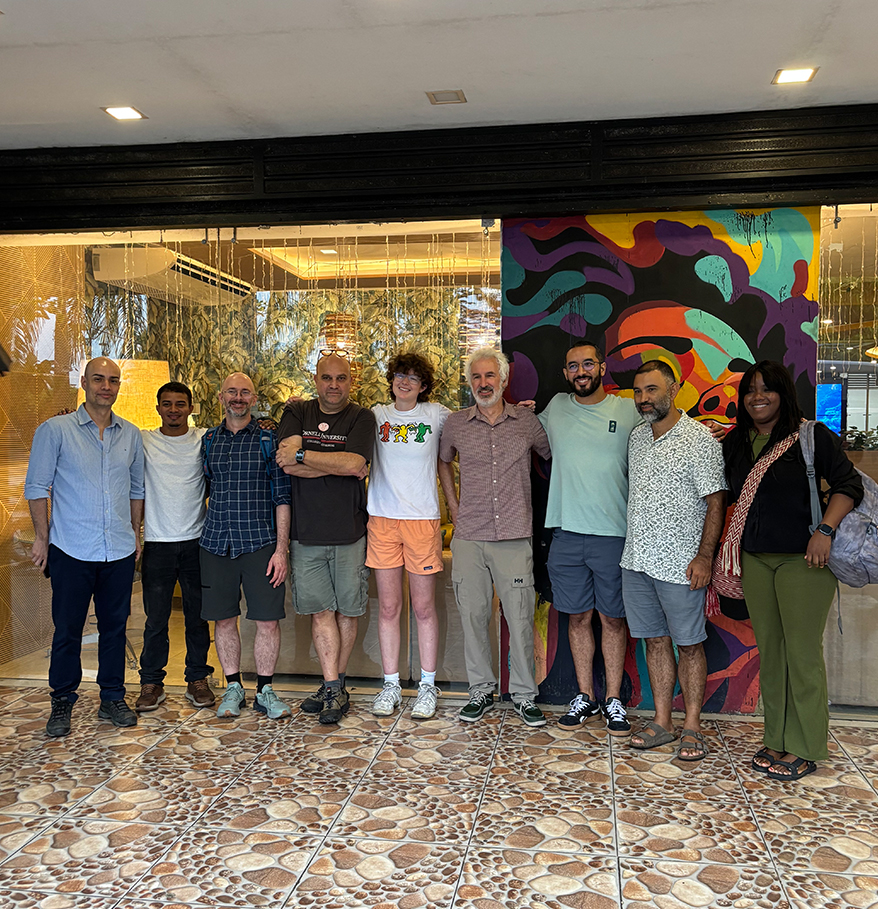
I was accompanied by the research group from the DeFrees Hydraulics Laboratory at Cornell University, where I am currently pursuing a PhD in environmental fluid mechanics. Researchers from the Environmental Defense Fund (EDF, United States), the Mediterranean Institute for Advanced Studies (IMEDEA, Spain), and the Javeriana and National Universities of Colombia also joined us. For several members of the team, it was their first time setting foot in the mangrove forest and, unsurprisingly, their first time sinking into its mud.
The purpose was clear: to turn the mangroves and estuaries of Punta Soldado into a natural laboratory where it would be possible to measure and understand how water moves within the forest, how tidal channels connect, and how these dynamics relate to key ecological processes for restoration, biodiversity, and the capture and emission of greenhouse gases such as methane. But before we could begin, we had to address an inevitable question.
How do you go from working in a controlled environment like a laboratory, where the temperature is stable, there is electricity, internet, food, and predictable schedules, to doing research in a rainy place where the temperature exceeds 30°C and humidity is close to 100%; where equipment depends on the sun to power up, tides dictate schedules, and where you have to climb mangrove roots to install instruments?
The answer can be summed up in one sentence that encompasses how to carry out this type of science: this process is only possible by working hand in hand with the local community. The relationship between the community and Coastal Solutions fellows began in 2019, through conversations and collaborative work aimed at strengthening the island’s coastal resilience to extreme ocean events and conserving the habitat for the thousands of shorebirds that visit its beaches each year. Many of these conversations took place over coffee and fresh coconut water, which accompanies so many important decisions in the Pacific.
Over time, this process inspired a group of young community members to create the Playa Viva Agency and continue to support conservation efforts through nature and scientific tourism. Today, we can confidently say that Playa Viva has become an experienced and local ally, capable of enabling scientific work in Punta Soldado.
Playa Viva also tells a story that connects generations in the Coastal Solutions Fellows Program. Its growth has been further supported by 2023 fellow Ballantyne Puin, who has driven collaboration between communities, academia, and the public and private sectors to bring real change in the territories. In this case, that thread of continuity is an integral part of the Program’s impact, because it shows that strengthening local capacities is cumulative and is consolidated when relationships are consistent.
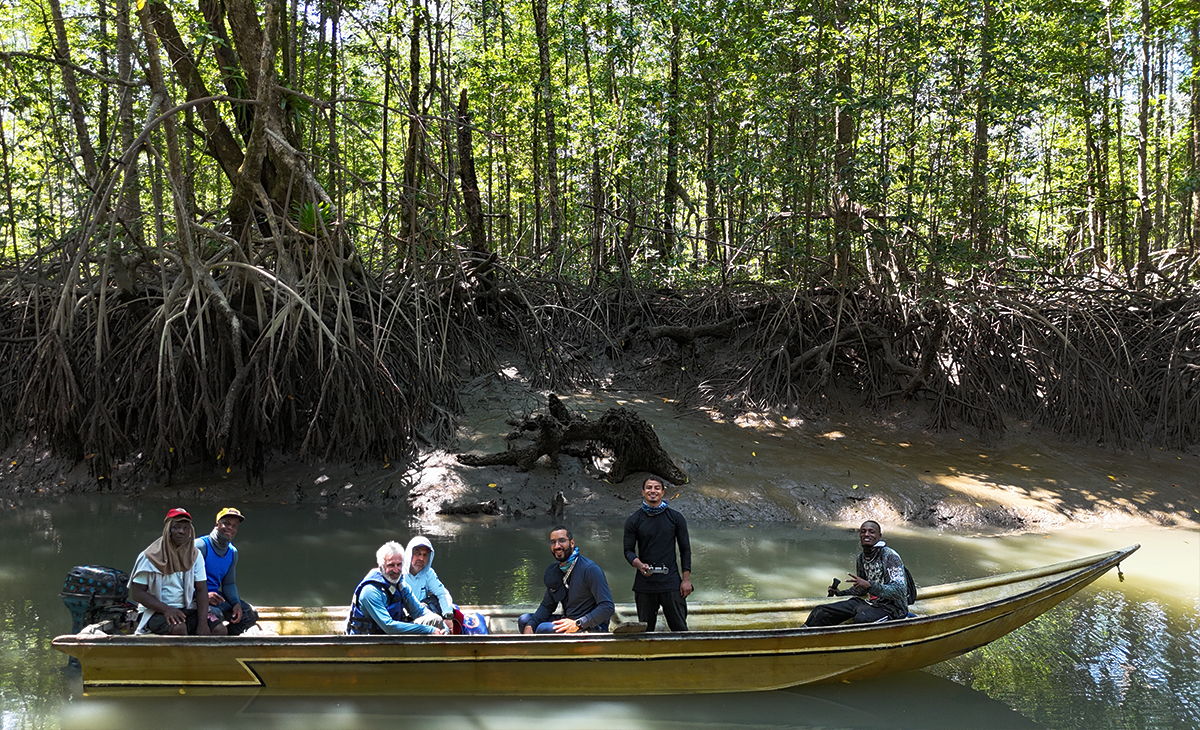
Out in the field, the young people from Playa Viva were the real heroes of the working days. They installed our GoPro cameras on the aerial roots of the trees, which we used to measure the speed of water within the flooded forest and in the estuaries. They also helped us to identify the best sites for installing CO₂ and methane sensors and, using drone photography, helped us to collect information on root density and geometry to link forest structure with hydraulic resistance.
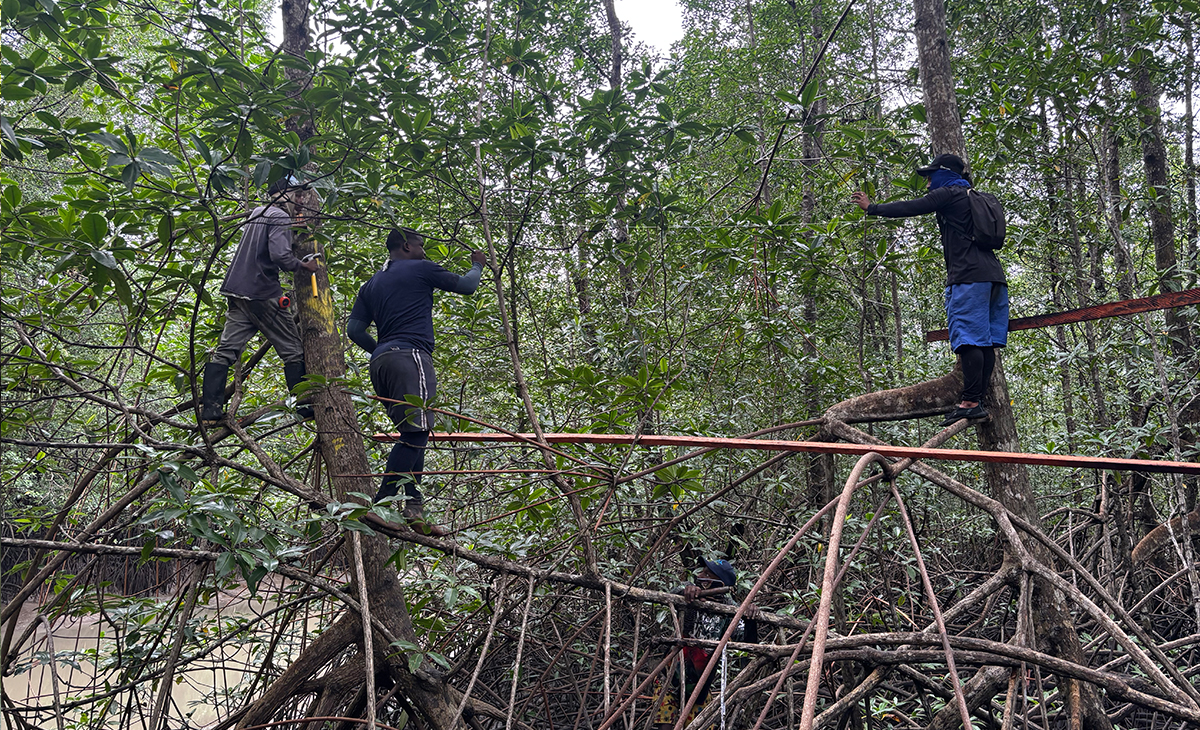
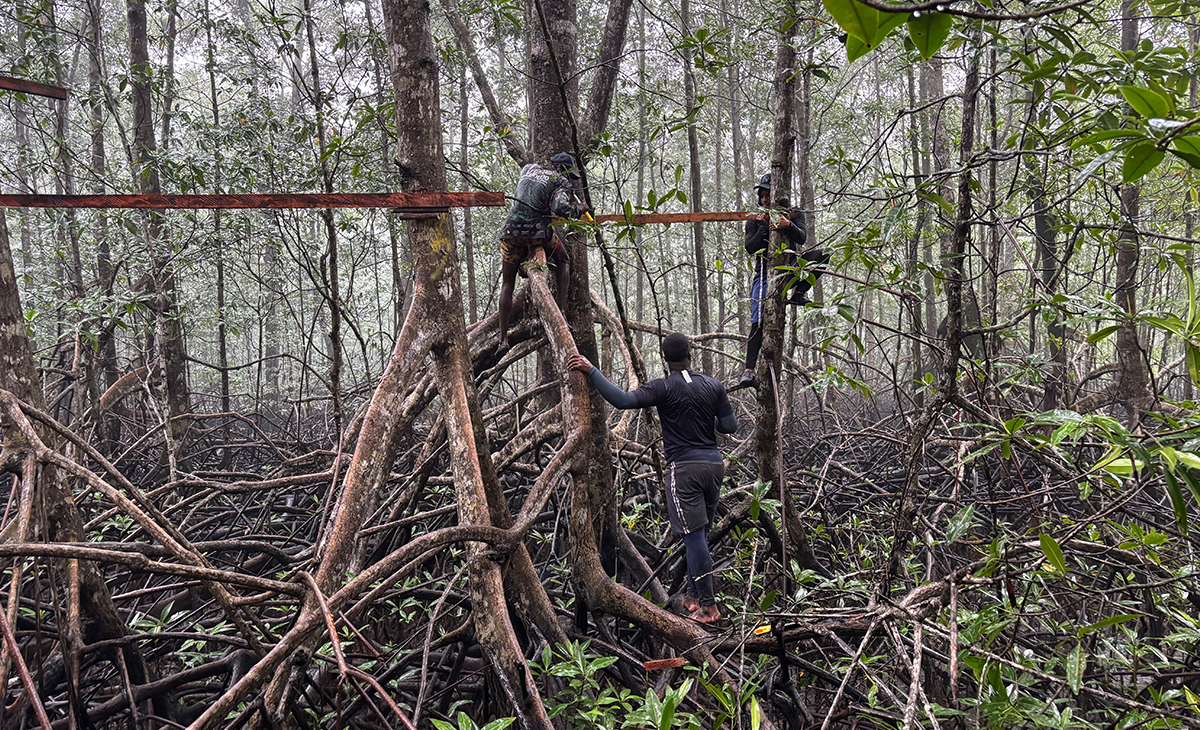
Additionally, through their management of logistics, Playa Viva ensured that we gradually learned more about the culture of Punta Soldado and the Colombian Pacific. During the trips, for example, they always offered extremely useful suggestions on how to best set up our equipment and how to move safely through the mangroves. What’s more, the food was always spectacular and authentic!
This support has made it possible to conduct scientific work safely, respectfully, and continuously in the territory. This campaign is part of an effort funded by the Cornell Atkinson Center for Sustainability and the Environmental Defense Fund, aimed at integrating applied science, engineering, and governance to strengthen mangrove restoration and resilience, with an emphasis on verifiable results for biodiversity and blue carbon. In Punta Soldado, this approach is of practical significance because these measurements are not confined to field notebooks or submitted as reports to donors. They become a tool for making informed decisions of where to intervene and how to design actions, together with the communities, that respond to the actual conditions of the mangrove.
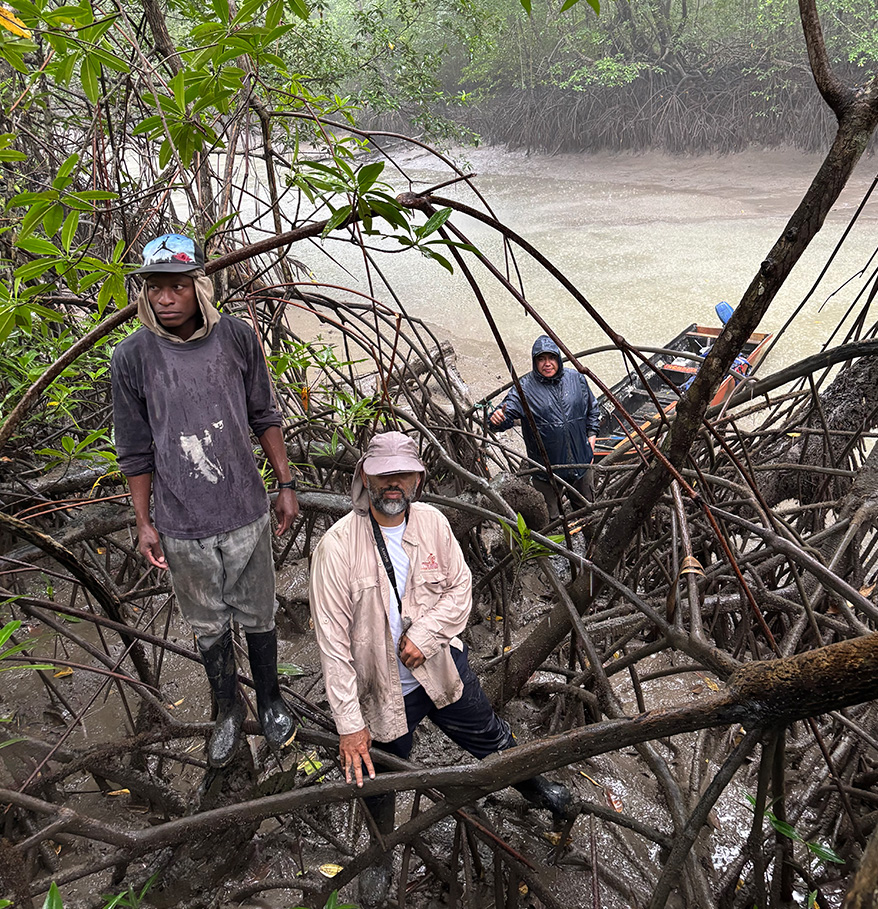
In other words, the value of this work is not limited to producing data. It seeks to establish a way of thinking and acting that connects measurement, decision-making, and action, one that can be sustained over time through local capacities and consistent partnerships. For this reason, community leadership and the work of Playa Viva are not just the context of this story, they are an essential part of the solution. They make it possible for science to be carried out with the territory, and for engineering to serve as a bridge between knowledge and conservation. In Punta Soldado, measuring the mangrove is also a way of caring for it, because every piece of data collected with the community brings restoration closer to real and lasting results.
The Coastal Solutions Fellows Program builds and supports an international community to design and implement solutions that address coastal challenges across the Pacific Americas Flyway. Our main goal is to conserve coastal habitats and shorebird populations by building the knowledge, resources, and skills of Latin American professionals, and by fostering collaborations among multiple disciplines and sectors.